
Martha Lincoln
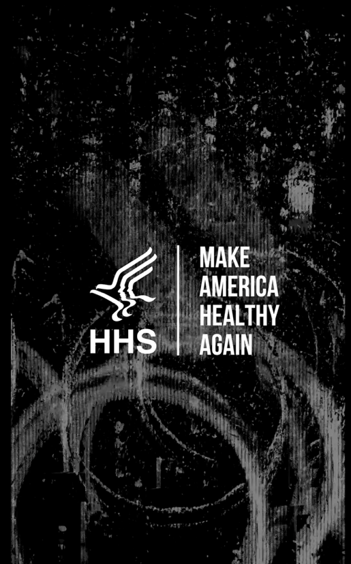
A screen grab from Robert F. Kennedy Jr.’s “Rock Out Workout” video. Via the Twitter account of Department of Health & Human Services Secretary Robert F. Kennedy (@SecKennedy/X). February 17, 2026. https://x.com/SecKennedy/status/2023860472026669400
In February 2026, Robert F. Kennedy Jr., Secretary of the US Department of Health & Human Services (HHS), posted a video depicting a workout performed with the right-wing musician Kid Rock (né Robert James Ritchie) to his official social media accounts. In the brief 90-second clip, shot and edited somewhat in the style of a music video, the two men progress through a weight-lifting routine — bicep curls, supine hamstring curls, and rope lat pulldowns, with some sit-ups thrown in. Patriotically, they pose by a swimming pool next to a replica Statue of Liberty, holding an American flag. For half a second, they sit in one of Ritchie’s classic cars — a blinged-out 1964 Pontiac convertible.
As the video continues, two quick edits show Ritchie and Kennedy taking a meal at the granite counter of a dine-in kitchen — a nod to the newly debuted HHS campaign “Eat Real Food.” Then a jump cut finds them in a traditional Finnish sauna doing push-ups and riding an exercise bicycle. Midway through cycling, Ritchie looks right into the camera and flips the bird.
Kennedy is next shown submerging himself in a cold plunge tub, still wearing his signature blue jeans. To indicate the icy temperature, a lattice of digital crystals forms across the footage. Wandering damp and shirtless past a billiard table, the HHS Secretary appears lost for a moment as he inquires “Where’s Kid?” It turns out that Ritchie is relaxing in the hot tub, but Kennedy is strict about keeping things moving, so they square off in a round of pickleball.
An array of healthy behaviors thus having been displayed, the montage concludes with Kennedy and Ritchie enjoying a glass of milk in an electric-blue pool nestled in a stone grotto. The words “WHOLE MILK” — another MAHA priority item — appear above them in dripping white script. The spectacle concludes with the HHS logo displayed next to the words “MAKE AMERICA HEALTHY AGAIN.”
Underscoring the masculinity of the two participants, who remove their shirts intermittently to display bare arms and torsos, the video includes dissolves of B-roll footage — a great white shark, a grizzly bear, a fighter jet, a bald eagle, fireballs, and lightning. It also features idiosyncratic typefaces — a graffiti font and a cast metal-style font — and video effects such as wipes, lens flares, VHS static, and film-stock scratches. An overall mood of revved-up freneticism is amplified by the use of footage whose speed has been increased, possibly to mask the participants’ subpar weightlifting form. The accompanying audio track is an up-tempo rap-rock single that Ritchie released in 1999 to certain critical acclaim. With lyrics that refer approvingly to themes such as “crackheads,” “hookers,” and “shots of Jack [Daniel’s whiskey] and caps of meth,” it’s an incongruous choice for a spot about wellness.
Kennedy and Ritchie’s “Rock Out Workout” video was widely mocked, with editorials in venues from Esquire to USA TODAY derogating its tackiness, unwitting homoeroticism, and aesthetic incoherence. But in spite, or perhaps because, of its excesses, “Rock Out Workout” had accrued 14.1 million Twitter/X views by the time of this writing (June 2026). The video’s prolific circulation via various online channels illustrates the tight relationship between MAHA activism and social-media influencing culture. Further, its inadequacies as a public service announcement notwithstanding, I suggest the clip illuminates key priorities and ideological dimensions of the “Make America Healthy Again” (MAHA) phenomenon, a quasi-social movement and political coalition that is headed by Kennedy.
In this Critical Care feature, I discuss the emergence of MAHA as a digital phenomenon, situating the “Rock Out” video in this extremely online public health subculture. I conclude by suggesting the limitations of a version of public health that is essentially entirely performative.
“When You Take That First Sip of Whole Milk”: Digital MAHA
The acronym MAHA was incepted during the 2024 presidential race, when Kennedy, a former environmental lawyer and notorious anti-vaccine activist, was vying for the Republican nomination. Though he ultimately suspended his campaign, Kennedy’s MAHA platform had significant popular appeal. When Donald Trump secured his place on the GOP ticket, he promised on the campaign trail that if elected, he would bring Kennedy into the administration and allow him to “go wild on health.” MAHA became such a prominent part of Trump’s messaging that his victory address included the line “Go have a good time, Bobby.” RFK Jr. was confirmed as Secretary of the Department of Health & Human Services in February 2025, and his wilding on American health has since translated into an array of disparate policy priorities — from combating petroleum-based food dyes to campaigning for “healthy” hospital food to reducing microplastics exposure.
As the slogan “Make America Healthy Again” suggests, the MAHA phenomenon parallels the MAGA movement, and it shares in MAGA’s overarching ethos of nostalgic revanchism and US exceptionalism. Applying these sentiments to health, MAHA “focuses on individual rather than structural solutions to the public health problems, is distrustful of science, and is tightly aligned with the wellness industry,” as the sociologist Pamela Herd writes. MAHA does not reject expertise altogether, but it discredits some forms of public health and biomedical authority while elevating charismatic, influencer-driven, selectively “natural” forms of health knowledge.
On the one hand, MAHA is supposedly a popular grassroots movement. On the other, it is institutionally diffuse, with resources, members, and activities distributed across a handful of causes and loose groups. Over the MAHA construct’s brief lifespan, its focus has drifted between topics and positions; survey data document supporters’ lack of consensus about what the MAHA agenda actually includes.
Yet MAHA is more than the sum of these parts: Beyond its cherry-picked policy agenda and a weakly unified “big tent” constituency, I suggest, MAHA is a digital phenomenon. Though it is animated by sentiments and lived experiences that many Americans authentically share, virtually all of its organizing and propagation takes place online. Drawing energy from meme culture, short-form video, and Kennedy’s own oddball mystique, the MAHA public communication strategy is geared towards brand momentum and short-term virality rather than education, capacity-building, or scientific communication; its messaging closely parallels the mis- and disinformative dynamics of online health influencing material. MAHA might even be described as pioneering a digital style of public health governancewhere state authority borrows from, and crosses over into, different genres of online influencing. This cross-pollination is not only reshaping what public health looks, sounds, and feels like; it is redefining the very construct of “public.”
Concomitantly, while MAHA’s online presence is considerable, the movement has little in the way of boots on the ground. Indeed, despite its populist image, the movement has virtually no ground game outside of occasional campaign-trail activities like site visits or speeches. MAHA leaders have not carried out in-person community organizing or reached the public with promotional media like billboards or mailers. Instead, the MAHA project has relied on electronic venues — social media platforms and federal websites — to organize supporters, communicate messages, and promote its overarching agenda of ostensibly common-sense health populism. Though more men than women identify as supporters of MAHA, self-described “MAHA Moms” are highly active online, making extensive use of social media to recruit members and share content. Female social-media influencers like the Turning Point USA-affiliated podcaster Alex Clark and the food additive advocate Vani Hari have both used their online platforms to endorse MAHA talking points.
Continuous with this tendency, Kennedy’s communications strategy as HHS Secretary has thoroughly blurred the lines between traditional forms of messaging by federal agencies and the world of digital-media influencing. Besides the “Rock Out” video, the Secretary has posted numerous influencer-style videos of himself doing push-ups and leg presses and pull-up rollovers, drinking a glass of milk in an AI-generated nightclub, fighting a Twinkie in an AI-generated UFC match, and slicing into sides of beef — all as if he were a latter-day culture hero. Social media accounts and websites belonging to the Department of Health and Human Services and other government agencies have also promoted MAHA tag lines and MAHA-aligned food products such as whole milk, beef tallow, and cane sugar.
The adoption of an influencing approach by federal officials — emphasizing spectacle, controversy, emotional appeals, and aspirational imagery over evidence-based recommendations — is a startling deviation from the norms of the American public health establishment. Yet in other ways it is an unsurprising turn. The second Trump administration has relied heavily on digital media, placing memes and short-form video at the center of its public communications, and its federal agencies have shared social-media material that is disturbingly out of keeping with the traditionally decorous, implicitly bipartisan profile of US government offices. Too, RFK Jr. is a well-established social-media influencer whose controversial online activities long predate his current appointment. In 2021 Kennedy was named by the Center for Countering Digital Hate as one of the “disinformation dozen”: twelve social-media users who were responsible for 65% of all social media messages opposing vaccination.
In his work with HHS, however, Kennedy is not merely bringing influencer culture into MAHA. He is making public health, or public health under his own particular stamp, into influence. The “Rock Out” video, like other digital MAHA materials, delivers a state-sponsored performance of bodily discipline, masculine vitality, and “common-sense” wellness. In their portrayal of physical health and how it is achieved, these texts suggest that virality and personal willpower can be substituted for social infrastructure and collective care.
Weird Flex: MAHA’s Will to Power
Unlike traditional public service announcements about health, which contain information and recommendations about health-promoting behaviors, “Rock Out” does not attempt to address the viewer in didactic fashion. Resembling content shared online by health and wellness influencers, the video depicts behavior for a viewer to emulate while deploying appeals that operate symbolically and affectively. Despite its lack of explicit talking points, I suggest that some of MAHA’s broader ideology and its specific conceptions of health are legible in this short text.
Fundamentally, the video presents health as synonymous with fitness (and, in passing, with good nutrition). Fitness is, in turn, equated with gym workouts — and the application of will, as a scolding subtext implies. Of course, this is not the first time that a federal administration has promoted exercise; Michelle Obama’s 2010 “Let’s Move!” campaign did something similar. Yet where the former First Lady’s publicity spots depicted her joyfully hula hooping or dancing with groups of diverse school-age children, Kennedy and Ritchie are working out alone. Though the men are dressed casually in athletic attire, their elite status is spotlit by their surroundings: Ritchie’s luxurious home gym, a space which — with its timber-frame construction, Southwestern tapestries, and taxidermy used as décor — has the look of a hunting lodge or a chalet. No other people are present, suggesting access to private spaces that are not available to the average gym-goer. Inadvertently, the video emphasizes the signature importance of affluence for Americans who wish to be healthy.
As such, the video does not depict health as a public good, a group endeavor, the result of environmental factors, or even as the result of policy. Rather, health is presented in terms of will to power —an expression of the animal energies symbolized by eagles, sharks, and bears; a ruggedly individualistic ideal for wealthy men to pursue in each other’s company.
It is remarkable for a federal health agency to put forward a vision of health that is so niche, elite, and even anti-populist, despite its rustic touches. “Rock Out” appeals to a narrow audience — not only for its eccentric form and content, but also because younger, female, nonwhite, and otherwise minoritized viewers are not likely to identify with the video’s two Euro-descended male protagonists, respectively aged 55 and 72. Official health messaging traditionally includes at least a token gesture towards diversity, but Kennedy’s video does not even go this far.While the HHS logo signifies plurality and inclusion — itsclever graphic design depicts a series of faces in profile, all shielded in an eagle’s silhouette — the video addresses not citizens of a republic, but an audience of followers and fans.
As a public health message, the “Rock Out” video is unserious; as an attempt at grandstanding, it’s a quintessential weird flex. Yet its implications for the nation’s public health are serious indeed. With its emphasis on individualism, its limited civic vision, and its aspirational aesthetic, the video suggests how the MAHA movement is officially attempting to redefine health as a bodily property, a moral achievement, and a personal responsibility — but not something democratic, inclusive, or accessible. In treating health as a performance, the video suggests a broader goal of the MAHA program: to make the entire enterprise of public health performative.
The overall popularity of the MAHA agenda discloses a deep and unmet public demand for accessible community-based health initiatives in the United States. Given this, one wonders why even the very cynical current administration hasn’t worked harder to build political capital from American desires and fears about health. It is noteworthy that there are no MAHA-branded pilot projects: no MAHA clinics, preventive health centers, food banks, cooking classes, sports leagues, or community gardens. Kennedy would have the power, resources, and public goodwill to materialize such initiatives, if he cared to; still further, he could push for corporate accountability, environmental health, and food security initiatives too. But doing any of that would require more than a social media post or a quick trip to the gym.
Martha Lincoln is Associate Professor of Medical Anthropology at San Francisco State University. Her research addresses the cultural politics of public health, with recent projects addressing medical crowdfunding and online health influencing. Her work has appeared in venues including Medical Anthropology Quarterly, Medicine Anthropology Theory, and BMJ Global Health, with public-facing essays in national and international outlets including CNN, Mondoweiss, STAT News, and The Nation. She is an editor-in-chief of the Journal of Vietnamese Studies.
The author gratefully acknowledges the Brocher Foundation for providing the support of a residential writing fellowship in July-August 2025. This publication was also supported by the Health Equity Institute at San Francisco State University, which funded dedicated research time.
Note. The views and analysis expressed in this essay are those of the author and not necessarily those of her institution or affiliates.