
Melina Sherman, PhD
Oubliette, or the Place of Forgetting
When I asked Dara how their life had changed since developing Long COVID, they shook their head.
We were speaking as part of my ongoing research with people living with Long COVID in the United States, many of whom had spent the past six years trying to make sense of an illness that outlasted the emergency structures built to contain it.
“It’s like you kind of fade away,” Dara explained. “I talk about it being an oubliette, right? The ‘place of forgetting.’ It’s easy to end up there, in a really dark and lonely place where you feel invisible.”
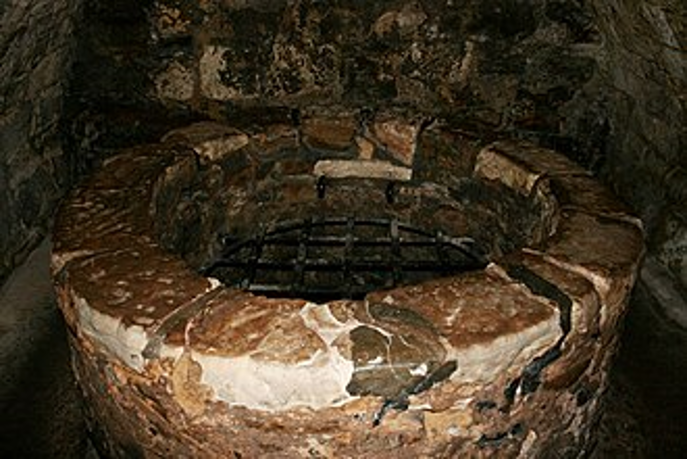
Image of an “oubliette” seen as the entrance to the Bottle Dungeon in St. Andrews Castle. Photograph by Richard Sutcliffe, licensed under CC BY-SA 2.0 via Wikimedia Commons. Retrieved on 24 June 2026 from https://commons.wikimedia.org/wiki/File%3ABottle_Dungeon%2C_St_Andrews_Castle_-_geograph.org.uk_-_6108124.jpg?
By the time I spoke with them, Long COVID had already forced Dara to step away from work, hobbies, family, and friends, shrinking their life down to the size of a bedroom. Trapped in that solitary place, they began to experience what it feels like to disappear.
Dara’s oubliette has stayed with me because it names a kind of suffering that is crueler than invisibility alone. It names a place where one can remain physically alive but socially receded from view. For many people living with Long COVID, illness begins by removing someone from work or public life, then gradually loosens their hold on a shared world.
The “dark and lonely place” Dara described helps explain the experience of living with an infection-associated chronic illness in the “aftermath” of COVID-19. Long COVID has made the COVID-19 pandemic a mass disabling event, leaving millions of people in the United States living with chronic illness after infection. In the post-emergency context, those people are not necessarily disappearing because no one has seen or named them. Sometimes they disappear after being officially recognized. In the wake of the COVID-19 public health emergency, and alongside the federal push to “Make America Healthy Again” (MAHA), chronic illness can be acknowledged and abandoned at the same time.
The Promise of MAHA’s Chronic Illness Politics
The U.S. Department of Health and Human Services (HHS) describes MAHA, under Secretary Robert F. Kennedy Jr., as an effort to reform “food, health, and scientific systems” and identify the root causes of chronic disease. HHS’s MAHA webpage states that 6 in 10 Americans have at least one chronic disease, while the executive order establishing the President’s MAHA Commission describes Americans as “becoming sicker” in ways that harm the economy and national security.
There is force in the claim that illness has roots beyond individual behavior. Medical anthropologists have spent decades making a related argument, showing how political, economic, and social conditions do more than just surround illness. They also become embodied as unequal exposure, vulnerability, and disease. That is part of what makes MAHA’s language of “root causes” so compelling. Food systems, toxic exposures, labor conditions, medical neglect, poverty, stress, and public institutions really do shape who becomes sick and, importantly, what happens to them afterward. For people living with chronic illness who have been told that their suffering is too vague, too subjective, too personal, or too hard to prove, MAHA’s systems language can sound like recognition, long overdue, of what they already know.
However, some causes of chronic illness are difficult to place inside MAHA because they are not easily converted into personal choice, consumer reform, or anti-pharmaceutical suspicion. This becomes especially consequential where chronic illness points back to COVID-19.
Long COVID disrupts MAHA’s approach to chronic illness because it carries the COVID-19 public health emergency forward in bodies that were supposed to have moved on. It cannot be detached from repeated infection, poor indoor air, workplace exposure, the absence of paid sick leave, the disappearance of testing, weakened public health guidance, or the public health decisions that made infection ordinary. These, too, are root causes, but they implicate collective conditions of exposure and the withdrawal of protections that would have to remain in place after the emergency. A major study of SARS-CoV-2 reinfection found that reinfection added risk for post-acute health problems across multiple organ systems, with cumulative risk increasing as infections accumulated. Long COVID belongs to the chronic disease landscape that MAHA claims to take seriously, while also pointing back to a public health emergency federal officials now describe as over.
Recognition Without Retrieval
Recognition can make suffering speakable without making care reachable. This is the problem I refer to as recognition without retrieval – when illness enters public language, but the structures that would bring people back into care, work, protection, and shared life do not follow.
On federal websites, HHS and CDC now describe Long COVID as a serious chronic disease following SARS-CoV-2 infection that can last months or years and result in disability. HHS estimates that 5 to 7 percent of U.S. adults, roughly 18 million people, are affected. Kennedy has also publicly promised that he is “100% committed” to finding treatments.
These statements did not arrive on their own or by virtue of institutional generosity. Patients forced them there. Long COVID has only entered federal recognition as a result of years of patient pressure, patient-led research, clinical advocacy, and disability organizing. People who were sick before there were Long COVID clinics, codes, consensus statements, or official webpages made the condition difficult to keep outside public language.
Still, legibility is not the same thing as care or retrieval from the oubliette of chronic illness. It can place an illness inside federal vocabulary while leaving patients in the same rooms, on the same waiting lists, under the same paperwork demands, moving through the same unstable recoveries, and facing the same risks of reinfection. Long COVID patients, clinicians, and researchers have described this gap concretely: There remains no validated Long COVID diagnostic test, no approved treatment, uneven clinical access, and too little coordinated investment for a condition affecting tens of millions.
This is precisely the gap Dara described, where the words for Long COVID may be present, but the experience of living with it is defined by something else – the absence of anyone coming back for you. The chronically ill person living after the emergency is left to manage the consequences alone.
The fissure separating acknowledgement from care is particularly visible in the federal record. In March 2025, HHS allocated $260 million within a new “Administration for a Healthy America” to fight the chronic illness epidemic. At the same time, it also announced what it called a major restructuring of the department, which consolidated its operations into fewer divisions and regional offices and implemented large workforce reductions across the agency. On an HHS webpage of so-called “big wins,” the department listed “cancelling $14.1B in COVID-related grants.” Like this, the same administration that promised to confront the root causes of chronic illness was cutting COVID-related funds tied to one of the largest ongoing chronic illness crises in the country.
Around the same time, Politico reported that the administration was closing the Office of Long COVID Research and Practice, the federal office created in 2023 to coordinate Long COVID resources, research, and support across agencies. The office had not solved Long COVID, but its existence showed that the condition is a problem requiring federal coordination rather than scattered gestures of concern. Closing it while calling Long COVID an ongoing public health challenge reveals the shape of post-emergency abandonment. Even though the illness is named, the structures meant to hold that naming in place disappear.
By September 2025, recognition had taken the form of HHS roundtables with patients, caregivers, clinicians, researchers, and advocates. Kennedy called the event the beginning of a sustained national effort and announced a Long COVID public education campaign and open-source medical resource platform. Yet there were no announcements of significant new research funding, support structures, or concrete responses to longstanding patient demands followed.
Then, in March 2026, HHS launched a Long COVID website, it’s largest public-facing action since the September roundtables, describing the condition as a multisystem, invisible illness and promising a clinician locator and “tech sprint.” Critics again pointed to the continued absence of any new program, funding mechanism, or durable initiative to help patients.
Gestural Infrastructure and the Appearance of Response
The Long COVID website and roundtables are best understood as gestural infrastructure, or public-facing signs of concern that create the appearance of response without redistributing funding, protection, or responsibility. By gestural infrastructure, I mean public action that borrows the form of infrastructure – in websites, roundtables, platforms, and promised tools – without building the durable systems that would make care, prevention, or support materially available.
These gestures are especially evident in the federal government’s approach to Long COVID prevention. On its website, CDC tells employers that preventing COVID-19 at work can help reduce the risk of developing Long COVID. The CDC specifically names ventilation, filtration, respirators or masks, and workplace accommodations as steps employers can take to support Long COVID patients and illness prevention. But prevention cannot be reduced to advice posted on a webpage; it depends on the public health systems that make infection risk visible, coordinate guidance, and provide the material conditions for adequate protection. In interviews I conducted with people with Long COVID, many described these protections less as abstract policy preferences than as the very conditions that determined whether they could risk a visit to a clinic, remain at work, see family members, or leave the bedroom at all.
Vaccination remains one of the central tools in that system, reducing severe COVID-19 and lowering the risk of Long COVID. Yet HHS’s broader vaccine politics have unsettled the very infrastructure used to coordinate prevention. In June 2025, HHS removed all 17 sitting members of the Advisory Committee on Immunization Practices (ACIP), which advises CDC on vaccine safety, efficacy, and clinical need. The department framed the move as a “bold step” toward restoring public trust.
For people with Long COVID and other infection-associated chronic conditions, prevention is care, since reinfection can exacerbate illness, destabilize fragile recoveries, and lead to new disability. Ventilation standards, paid sick leave, masking in healthcare settings, testing access, and vaccine guidance all help decide whether more people will be pushed into the oubliette at all.
Chronic Illness After the Emergency
MAHA reveals a post-emergency arrangement that neglect alone cannot explain: Long COVID has entered federal chronic disease language, but it enters on narrowed terms. The illness can be called serious, disabling, and consequential while the emergency that produced it is treated as over. It can be folded into chronic disease politics while being detached from mass infection, reinfection, and the dismantling of collective protections.
This is how the “after” is made and sustained. Ongoing harm remains, but fewer institutions are made responsible for it. Chronic illness becomes visible as a problem while the arrangements that keep making people sick remain mostly untouched.
Anthropologists have long examined how people can remain visible to institutions while still being abandoned by them, and how infrastructures can carry promises that exceed what they materially deliver. Long COVID exposes both problems at once. Gesture is the appearance of response, while retrieval points to the harder question of whether recognition actually reorganizes care, protection, and responsibility.
Dara remains in the bedroom. Alive and waiting, but easier to gesture toward than to retrieve.
Retrieval begins where recognition has stopped. It begins with research funded at the scale of the crisis, clinical pathways patients can access, workplace protection from repeated infection, stable prevention guidance, less punishing disability and accommodations systems, and patient expertise treated as part of public health.
A serious chronic illness politics after COVID would not congratulate itself for naming the forgotten. It would ask who put them there, what keeps them there, and what needs to change to pull them out from the darkness of the oubliette. Until then, the promise to make America “healthy again” will continue to be haunted by the millions of people it has learned to name and leave behind.
Melina Sherman is an Assistant Professor of Anthropology at the University of Central Florida. Her research examines how public institutions respond to health crises and what happens when emergency measures are withdrawn. Melina’s current book project investigates the governance of chronic illness in the United States after the COVID-19 pandemic.