Sanaullah Khan
My friend looks at her phone and then at me and says, “The air quality is dangerous.” She says this matter-of-factly, as if repeating a public service announcement that no longer carries urgency. Then she asks, quietly, “Is this cough going to turn into a flu?” I hesitate but am left without a response. “Maybe it’s just smog,” I say, as though naming it makes it manageable, while also acknowledging that these symptoms won’t go away. The air was causing this irritation. The cough lingers, thick and dry, as I also experienced, and with it comes the uneasy sense that this is no longer episodic. Symptoms here in climate vulnerable communities in Pakistan particularly in Lahore do not pass easily; they acquire a degree of permanence.
The piece argues that breathing itself can no longer be taken for granted in cities like Lahore; instead breathing turns into a deliberative act. How much bad air a person inhales is shaped by a politics of exposure where class status determines how long one must stay outdoors for work, while staying indoors becomes a luxury only a few can afford. This connects to what medical anthropologists have recognized when they suggest that “ordinary moments can be experienced as embodied symptoms of ecological change.” The body becomes a site where structural inequalities and environmental conditions are simultaneously felt and made legible. The very air one breathes has become politicized — the state manipulates smog data, performs “anti-smog gun” campaigns on social media, and imposes lockdowns echoing Covid-era restrictions, deploying censorship rather than addressing the actual causes of sickness and inequality. The body that breathes in Lahore is not just a biological body — it is a political one, absorbing inequality, authoritarianism, and the broken promises of growth with every breath.
In November 2024, Lahore’s Air Quality Index exceeded 1,500, making it one of the most polluted cities in the world, with outdoor workers, children, and the elderly bearing the greatest health burden. Climate-related morbidities push us to consider “the relationships between inequalities and structural determinants of health to the conversation about climate change,” recognizing that the origins of this crisis lie in what they describe as “the capitalist treadmill of production and consumption“. As Farman and Rottenburg warn, citing the Lancet-Rockefeller commission, “we may have mortgaged the future in attaining our current level of health and development” — a sentence that lands differently when read from cities where particulate matter smaller than 2.5 micrometers (PM2.5) levels run fifteen times above World Health Organization (WHO) safe limits, and where the construction and industrial growth driving those numbers is precisely what the state frames as progress.
Svendsen and Spalletta question the logic of “health data saving lives” by asking the question: “which lives and at what costs?” This cuts to the heart of the Pakistani state’s social media governance of smog, where Air Quality Index (AQI) dashboards and anti-smog gun videos perform environmental care while the bodies of outdoor workers, children, and the elderly continue absorbing the deficit. The observation about non-human materialities as central to human health pushes us to think about the dust, the burning plastic, the unfinished roads as critical determinants of poor health. These very materialities serve as active producers of the coughs, infections, and chronic respiratory conditions now settling into the bodies of urban Pakistanis as permanent conditions rather than passing symptoms.
In Lahore, the winters are usually marked by a dense smog cover, which often gives a strange kind of irritation while breathing. The government often states that smog has disappeared, and people often debate whether the misty effect is caused by smog or fog. “Smog ha ya fog (is it smog or fog?)” has become an important question through which to talk about the weather, and whether one could find pleasure in the fog’s accompanying misty smell (as my father says, “the clouds coming to the grounds”) or take precaution by wearing masks or staying indoors.
During a drawing room discussion with relatives in Pakistan, my cousin shares asthma-like symptoms with another relative (a physician). Yet another relative complains about taking antibiotics every few weeks for her throat infection. The doctor in our family tells one relative, “This is all because of the smog, you should try to put an air purifier and maybe use an inhaler.” My relative’s cough had eventually turned into a lingering pain in his back, and he didn’t quite know whether this was linked to his now almost chronic cough, or due to something muscular, resulting in a form of diagnostic confusion about the cause as climatic or merely muscular. On the one hand, the moment revealed that doctors too relied upon the logic of health as a private commodity. On the other hand, it revealed that the causes of poor health were attributed variously to neglect and environmental toxicity produced through government policy, or to factors that seemed apolitical, as if sickness was natural and inevitable (as in the references to “muscular pain” rather than produced concretely by the environment).
The interpretive contests over the presence of smog and its causes were also shaped by the perceived linkages between air and politics. For some, toxic air was representative of living in new conditions of authoritarianism where the space for representative politics—or to voice one’s complaints— had greatly shrunken, where one could live and not complain. My cousin, a supporter of the now ousted Pakistan Tehrik-i-Insaf with its now imprisoned leader, Imran Khan, once remarked on the new political situation in the country, “We have accepted, but not agreed.” This represented patience for a new political situation to arise where the sufferer could at least register a complaint to the state without being treated as an agitator, defector or an enemy. My rideshare driver expressed the same sensibility when remarking on smog and increasing inflation, “zindgi tou guzarni hai, chahay has kay guzaro, chahay ro kay guzaro (life will go on, whether you live happily or keep crying). It is within the same register that another driver also made sense of environmental toxicity and the rise of authoritarian politics.
One day, while travelling in a taxi, I find a type of gray opacity in the air. A truck crawls down the road releasing a chemical spray that the government claims will reduce smog. The driver laughs when I ask about it. “This causes even more toxicity,” he says. “Once the spray fell on me. I had to see a doctor. It burns — like tear gas.” He compares it to the tear gas deployed by the Pakistani state against supporters of former Prime Minister Imran Khan, whose removal from power in 2022 triggered years of mass protests met with escalating state violence. Periodic protests since his arrest and the repression of dissent is akin to what Acikcoz refers to as “atmospheric violence” to represent the state’s repression of protestors in Turkey. Pollution, protest, and punishment collapse into a single sensory register: burning eyes, constricted throats, bodies disciplined through air. In conditions, when complaint was equated with agitation, the space for clean air had to be carved deliberately as a private space.
The same day, while waiting outside a wedding hall, I find the air so dirty that I cough several times as I try to breathe.I try to take a deep breath. I cough. I try again. I cough again. On the third attempt, my body refuses. I retreat indoors, assuming—naively—that enclosed air might be cleaner. Clean air, like education or healthcare, is something the affluent now imagine as a private acquisition rather than a public provision. Just as people began buying air purifiers to clean indoor air during Covid-19, these same air purifiers have begun to slowly line up on supermarket shelves in Lahore. This was representative of the “crisis of overaccumulation”, as David Harvey has argued, which is often overcome by commodifying nature itself, in this case the ability to breath clean air by staying indoors.
Meanwhile, the local government in Punjab claimed that they had dramatically worked toward reducing smog. Maryam Nawaz, the social media-savvy chief minister, said in a speech that she only boasted because she had delivered on her promises. She routinely posts about her accomplishments in making healthcare accessible. Under the program, Sehatmand Punjab, she seeks to bring healthcare to the doorsteps and rapidly increase health promotion on chronic and infectious diseases. In October 2025, Nawaz posted a video of anti-smog guns being deployed in Lahore, along with the post, “Historic breakthrough in the fight against smog in Punjab! The first-ever Anti-Smog Gun trial in Kahna, Lahore, was a massive success, improving the Air Quality Index (AQI) from a hazardous 666 down to 170. A nearly 70% reduction in air pollution! This innovative step was taken under the direction of Chief Minister Maryam Nawaz Sharif to protect the public health.”
Some social media users were quick to identify that not only was the government manipulating numbers, but by citing technical issues, the government deliberately concealed parts of Punjab with high levels of smog unavailable on the government’s official website. The local government also occasionally imposes lockdowns reminiscent of Covid-19 days, when restrictions on movement began to be viewed as a superficial fix—demonstrating the state’s intent and seriousness about preparedness, but doing little to assuage systemic inequality. In this context, lockdowns inequitably affect the poor, restricting their movement specifically to cantonments and middle-class neighborhoods, as has been in South Asian cities more generally.
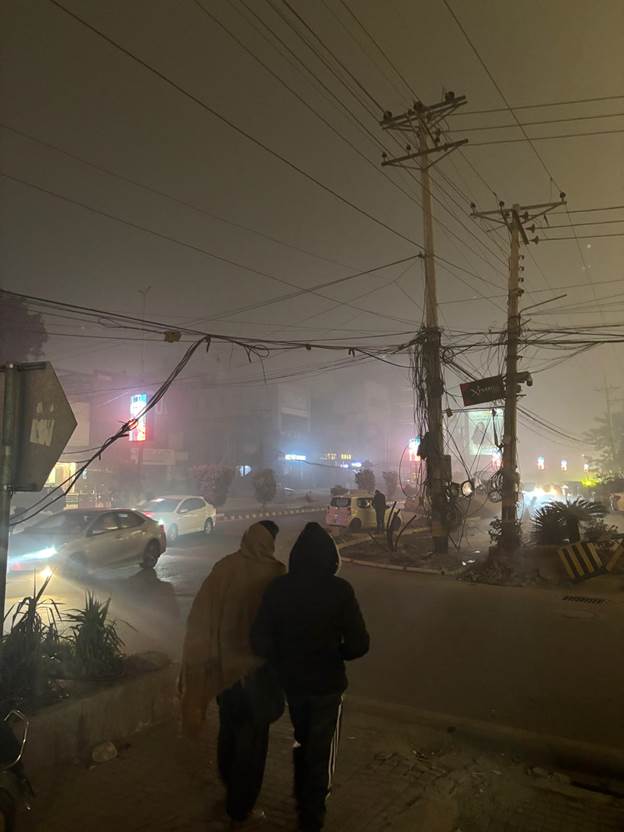
Figure 1: A smoggy night in Lahore, taken by the author.
A chai dhaba where my friends and I hang out at night remained open as lights were dimmed to avoid attention from state authorities, and people could still enjoy themselves. There are now smog lockdowns in Lahore, which prevent restaurants from staying open late, representing flashbacks to the Covid-19 days, when shutters would be closed, yet people found new ways to keep the economy going. This time, too, the lockdown was seen as a sign of the state’s seriousness toward smog, even if closing shops early did little to address systemic issues.
In this context, the responsibility to take care of oneself was also placed on the shoulders of individuals. Just as clean air was privatized for the middle-class, waste management, too, became an individual responsibility in low-income neighborhoods and slums.
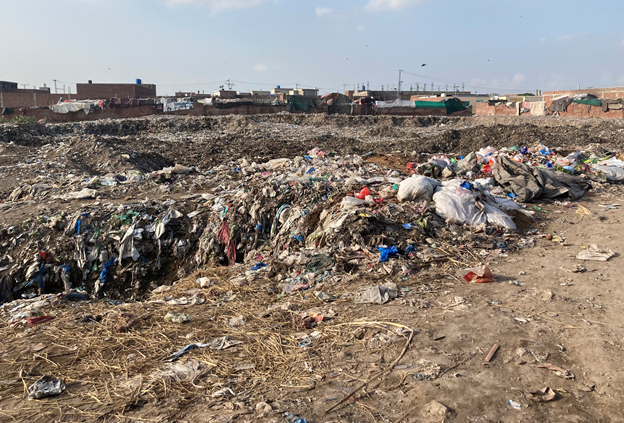
Figure 2: Afghan Basti, Lahore, taken by the author.
While driving on the Lahore’s Ring Road, passing city’s major waste disposal sites, it is common to see smoke arising from the piles of garbage. Incineration becomes a convenient way to dispose of garbage, leaving plastics to remain in the air indefinitely to be inhaled by others. The logic of privatization means that risk, too, is individualized. The same smoke is guarded or protected from entering private middle-class spaces. Sitting one day with my relatives, I smell fumes from burning plastic from a nearby site— my relative makes a disgusted face and asks her child to close the window. Similarly, when in a car one day, I opened a window and my young cousin said, “Close the window, there is dooha (smoke) outside.” Here the atmosphere itself was resignified as smoke.
Sometimes I would observe people inhaling the smoke from incomplete combustion (silencer ka dhuan). I vividly recall a scene. While driving from one part of the city to another, I saw a biker from the opposite side trying to dodge the smoke from a bus speedily while also covering his face with his elbow. One didn’t inhale clean air by default— inhaling fresh air was made possible by careful sensuous deliberation. The responsibility to navigate patches of dirty air, too, was privatized, and responsibility felt disproportionately by the people who lacked the privilege of travelling in air-conditioned cars and exercising in indoor gyms.
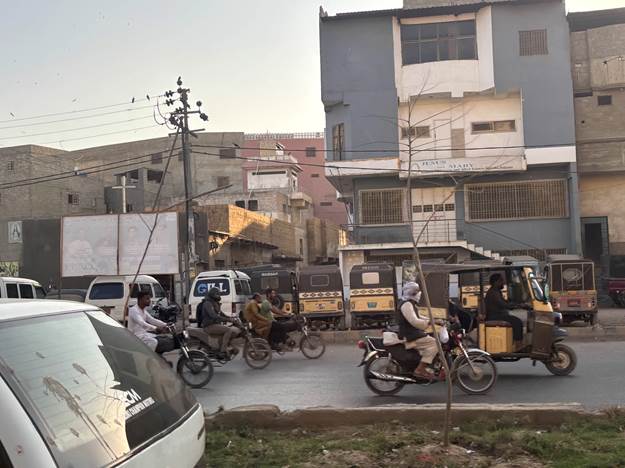
Figure 3: Biker with his face covered. It is also common to see people occasionally use their hands. Taken by the author.
In the Anthropocene, as lived from the global South, crisis is not a rupture—it is the medium. Bodies absorb pollution, politics, and uncertainty at once. To breathe is already to participate in a system that no longer promises repair, only ways to manage and suppress critique, where people imbibe the logic of making the system work even when it is otherwise too dysfunctional and broken, as Vernooij and colleagues have suggested. And yet, amid this “acceptance”, there remains an uneasy awareness and a form of deferring to the future when one may be able to voice the corrosive effects of climate change and economic inequality on bodies. Until then, there is tacit recognition, that what feels natural has been engineered, and what appears apolitical is deeply governed, and that air itself has become an archive of authoritarian growth—settling quietly into lungs, homes, and everyday life.
Author Bio: Sanaullah Khan is an assistant professor in anthropology and an affiliate faculty in the program on human biology at Hunter College/City University of New York. His work on militarization, care and healing in Pakistan has appeared in Medical Anthropology and Ethos, among other places. His work on the histories of psychiatry and medicine has appeared in the Anthropology of Consciousness. Among other issues, he is currently investigating how carceral logics are influencing pharmaceutical regimes and care in cities like Akron/Cleveland, Baltimore and New York. This research is forthcoming in City & Society. He is also the co-editor of the volume Globalization, Displacement and Psychiatry (Routledge, 2024).