ADTSG is a group for medical anthropologists and other social scientists with research focused on Alcohol, Drugs, or Tobacco to network, share information, and collaborate on potential projects. We typically host a gathering during the SfAA and AAA meeting each year.
Chair: Megan Sarmento, [email protected]
Vice Chair: Zachary Whiteman, [email protected]
Graduate Student Liaison: Abigail Shepherd, [email protected]
General Inquiries/Group Email: [email protected]
Facebook Group: https://www.facebook.com/groups/1520777234890158/
Annual prizes/awards: Graduate Student Paper Prize, Graduate Student Travel Award, Contingent Faculty Travel Award ($100 each)
Student Spotlight
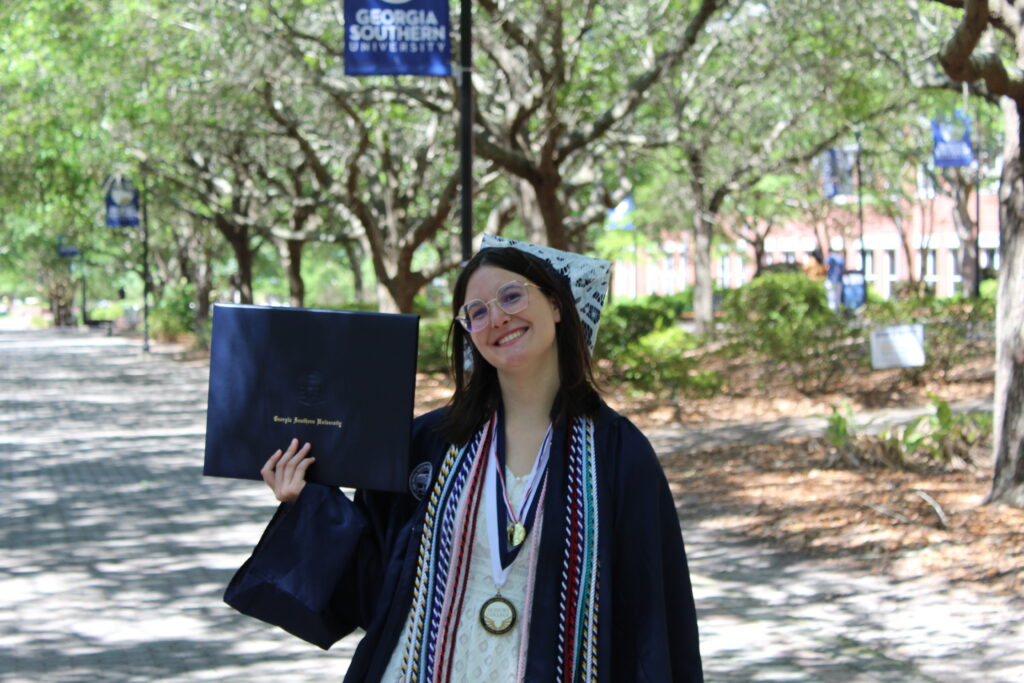
The Alcohol, Drugs and Tobacco Study Group SIG is proud to highlight the incredible work of undergraduate and graduate students researching drugs, alcohol, or tobacco. This summer, we’re highlighting the work of Logan Collins, who recently graduated from Georgia Southern University with a bachelor’s degree in anthropology and a minor in public health. In the fall, Logan will begin a doctoral program in Addictive Disorders and Recovery Studies at Texas Tech. Read more about her journey with drug-related research and her future goals here:
1. Why are you interested in drug-related research?
My interest in drug-related research stems back to my childhood, where I grew up in the recovery community. I have a few family members who are in recovery from drug and other substance-related problems. I spent most of my elementary and middle school years sitting in the back of old church rooms, entertaining children while our parents were attending Narcotics Anonymous meetings. I never thought much about this until I got to college at Georgia Southern and needed to pick a minor to go along with my anthropology degree, which required me to examine my current interests in conjunction with my past experiences. Upon this reflection, I realized my connection to the recovery community was not an average childhood experience and might have something to do with my then-current involvement with drug prevention efforts on campus. After deciding to declare a minor in public health, starting my research on drug use among Georgia shrimpers, and working with a local recovery community organization, I knew I wanted to dedicate my academic career to the drug use and recovery field of study.
2. What are your research plans for studying drugs/drug use?
Currently, I am interested in many topics for research. First and foremost, I want to focus my research on community-led recovery initiatives in rural areas. It is important to me to understand how to better promote and sustain movements focused on expanding access to recovery supports and recovery-friendly communities at large. After completing my research on the relationship between drugs and Georgia’s shrimping industry, I have been left with a continued interest in researching the relationship between work environments and drug use, particularly in healthcare settings or white-collar workers. Finally, my most current research ambition is focused on capacity-building measures for peer-run programs. As I enter my program at Texas Tech, I look forward to narrowing my interests down a bit and possibly discovering new ones, while always keeping an anthropological approach to my research.
3. How does anthropological theory inform your research on drug-related topics?
Anthropology has not only given me the tools to conduct community-informed research, which I find critical for producing practical solutions, but also powerful theories to situate my work within the broader contexts. I often find myself turning to Singer’s Critical Medical Anthropology to understand how large-scale shifts in the global market have influenced drug use patterns in some of the smallest and overlooked communities, and Farmer’s thoughts on community health workers to help mitigate some of the impacts of these shifts. I find theories on how syndemic suffering and environmental impacts can influence the many reasons why someone might turn to drug use useful, especially as I focus my research on rural, underserved areas. I am grateful to my training as an anthropologist for introducing me to these insights, and I can’t wait to continue applying them in my future work while also uncovering more theories surrounding drug-related topics.
4. What do you hope to do after you graduate with your Ph.D. in Addictive Disorders and Recovery Studies?
While I am sure my plans might shift over the next four years, my current hope is that, after I graduate and complete some postdoctoral research, I can find myself working in a space where I use research to influence drug- and recovery-related policy. I believe the most rewarding part of being an anthropologist is seeing change emerge from people’s lived experience, and I think one of the most impactful places to see that change is at the policy level. I do not have a clear picture of exactly what that job might look like, but I do not worry too much about it. I like to leave myself some wiggle room when it comes to my future plans. Saying yes to unexpected offers got me to where I am now, so it seems to be working.
We are excited to support Logan in all of her future endeavors!
P.S. Join our Facebook group to stay up-to-date with all ADTSG-related announcements and activities.