Métrey Tiv
In this piece, I take a critical stance on the ways of working in global health, drawing on my positionality as insider and outsider in this arena.
[Insider]—I am a medical doctor specializing in public health and social medicine with additional training in global health. Since 2014 I have contributed to various global health projects, with a special interest in development and humanitarian aid interventions.
]Outsider[—Convinced by the essential role of social factors in shaping health outcomes, I redirected my career to gain knowledge and experience in the social sciences, and socio-anthropological approaches in particular.
The participant observation exercise described in this flash ethnography started as an assignment for my Ph.D. training. I decided to build on it for my contribution to the workshop “Writing Global Health Ethnography” because the internal conflict that arose during the meeting I was observing and participating in centered on responsibility—the very theme of the workshop. Namely, I was confronted again with the concerns about responsibility and ethics of interventions in global health that I had been dealing with, repeatedly, in my public health practice.
][ What was I supposed to do again? ][
For the third time in the past hour, I strive to remind myself of the goal of this meeting. For the third time I have lost track. I wander somewhere between [insider] and ]outsider[. I am a Ph.D. student in anthropology with a background in public health medicine, practicing participant observation for training purposes. I am a participant observer in a meeting among experts, whose role is to assist the epidemiologists of a humanitarian organization with the methods of their research. This is a group of experts with whom I consulted for over a year. They are a part of my weekly routine, and the meetings are a friendly and safe space composed of mutually supportive colleagues… But today is different.
Today, I sit on a different chair—on the side, as an ethnographer. And for that reason, I feel nervous, despite having explained the reason for my returning after months of hiatus; nervous, despite having collected everyone’s informed—and enthusiastic—consent. I came prepared for the efforts of the participant observation exercise itself. I had completely misjudged the discomfort of sitting between two chairs, the troubling feeling of being an [insider] and an ]outsider[ at once. The conflicting positionality of being both a [public health expert] and a ]critical medical anthropologist[.
Exhibit one –
]outsider[ My eyes widen as I write down a string of technical words. Why are ]they[ using so much jargon when simpler words exist? The flight metaphors are a bit odd: “onboarding a team,” “landing a project.” Is it that, during the lifetime of a project, ]they[ float in the air? Out of touch with the ground… 35,000 feet above reality?
[insider to outsider] Come on, these terms are familiar, lower the eyebrow. You know the rationale behind this terminology. Everyone uses it in [our] field. Do you not feel guilty for wanting to read into the [standard procedures] and for disrupting [our] work?
]outsider to insider[ Do you think these words and expressions make people who use them feel… extra-ordinary? People who do special things, that can only be described with special words. Ah! The “French doctors”…
Exhibit two –
]outsider[ During the roundtable, something that I had never noticed before becomes obvious: the projects’ short names are diseases + countries. The study “Treatment adherence among HIV-infected patients on ART in Kenya” becomes “HIV in Kenya.” The meeting progresses and the list goes on—“TB in India,” “Ebola in Uganda,” “Malaria in Niger”—a political world map and the ICD-11 (International Classification of Diseases, 11th revision) unfold before my eyes. (For reasons of confidentiality, these are not the real project titles but rather, possible examples.) I even imagine a Global Health edition of the boardgame Monopoly, with countries as streets and diseases as pawns, and houses as… bilateral, multilateral, and humanitarian agencies. I wonder… Who would be the players? What currency would the banknotes be? And… who would manage the bank?

Figure 1: World map and pins. Stock image.

Figure 2: Monopoly board game. Stock image.
[insider to insider] My eyes roll. You know exactly why projects are named like this. More convenient. More systematic. Reproducible. Objective. Leave power outside.
]outsider to insider[ Is a world where ]“global health”[ is free from power dynamics even possible? These short names are formulaic, simple, and misleading, as if projects could be led identically, as if projects were about managing diseases in countries, regardless of the unique and complex contexts. And… where are the People?
[…] ]…[
I leave the meeting exhausted. Not from taking pages of detailed observations, but from the unsolicited inner conflict. The insider in me felt at home, understood everything, and joined the [Global Health] cause wholeheartedly. The outsider in me walked cautiously in unknown territory, keeping a reasonable distance from common practices in ]“global health”[, scrutinizing each of them through a critical lens.
]…[
[…] ]…[
]…[ ]…[ […[
Several months later. Insider and outsider are still debating and taking stock of what was at stake at the time of the meeting.
]outsider to insider[ Doing participant observation compelled you to revisit the familiar, as if through a new pair of glasses; this correction to your vision made everything look different.
[insider and outsider[ Our positionality as, respectively, a [longtime public health practitioner] and an ]apprentice medical anthropologist[ challenged our allegiance, and forced us to reflect on the kind ofanthropologist we want to be: an ]ethnographer of “global health”[ or an [ethnographer in Global Health]?
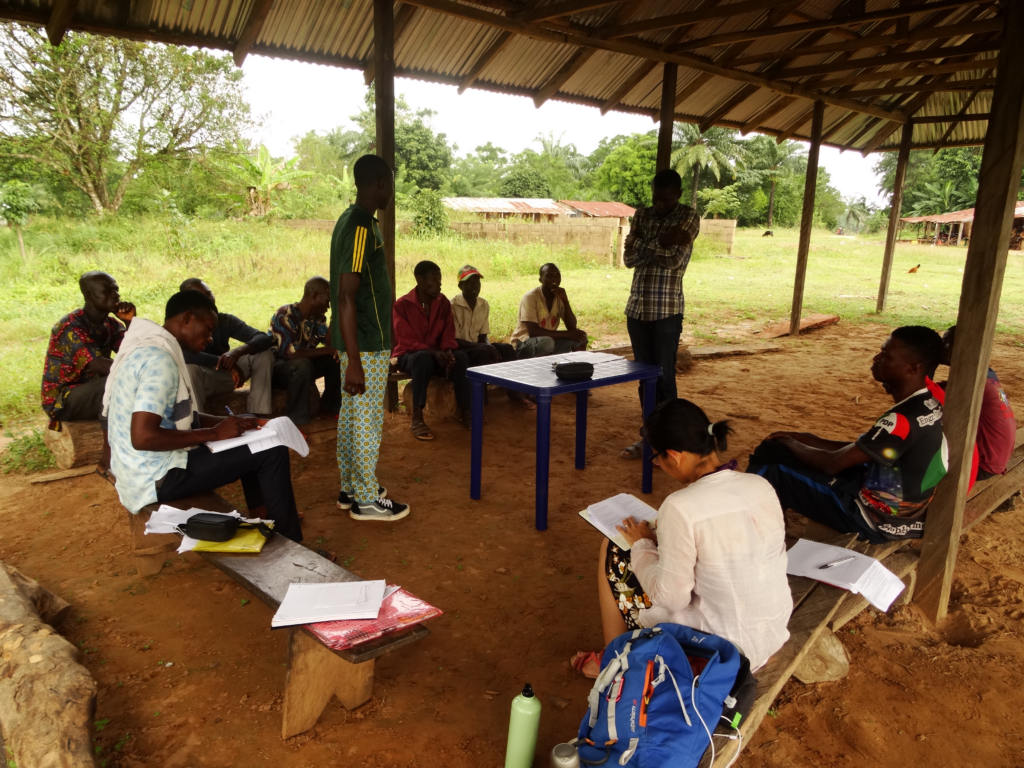
Figure 3: Doing ethnography “in” Global Health (2019). Photo credit: W.A. Ayambem.
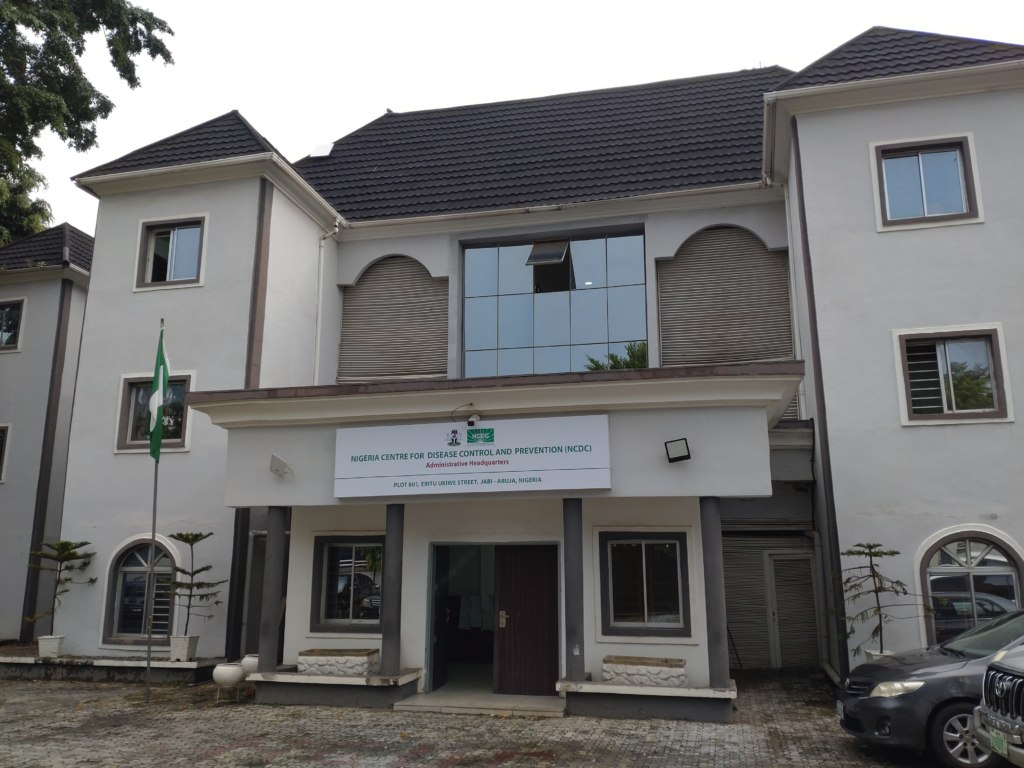
Figure 4: Doing ethnography “of” global health (2024). Photo by author.
]outsider to insider[ But wait. Is this choice even open to you anymore, now that you are equipped with new analytical lenses; now that you see the tensions and contradictions play out; now that you envision the harms that ]“global health”[ can cause?
[insider-outsider at once[ I try to reconcile this new, sharp view with my previous vision of what I know to be true achievements of [Global Health]: better-than-ever life expectancy and infant mortality worldwide, unseen levels of sanitation and vaccination coverage, etc., etc.
Finally, I see my way to a sense of responsibility—a way to leverage my unique positionality to inform a better [global Health[.
][Or do I][?
Postscript Reflection
In this flash piece I chose to use an inner dialogue format for several reasons: to express the inward conflict related to my positionality in a lively way (like a theatre play), and for the conciseness imposed by the wordcount limit of such a format. This format also required me to find a fine balance between the gain in dramatic effect and the loss of thickness, fine-grained level of description that is usually found in classic ethnographic writing. To some extent this also limited the room for an elaborate reflection and discussion. That being said, I believe the flash piece format to be adapted for making striking ethnographic accounts, and especially well-suited in the context of rapid changes observed in the field of global health. This written form may also encourage disciplinary bridges at the crossroads of global health and social anthropology audiences, through a format which is not typically found in either discipline (i.e., neither a biomedical article following the IMRAD structure, nor a typical ethnographic article or monograph).
Acknowledgements
I am grateful to the group mentioned in this piece for their trust and intellectual openness. I am also deeply grateful to my coauthors in this collection for creating together an atmosphere of excellence, trust, and compassion during the workshop and beyond.
Métrey Tiv, MD, MMSc, is a Ph. Candidate in Anthropology at Durham University, UK. She received a medical degree specialized in Public Health and Social Medicine from Paris 7 University, France, and a master’s degree in Global Health from Karolinska Institute, Sweden.
This essay is part of the series “Flashes of Responsibility: Craft, Ethics, and Impact in Global Health Ethnography,” co-edited by Liana Chase,* Marlee Tichenor,* and Sienna Craig.
*Chase and Tichenor are co-first editors of the series.